

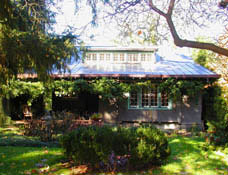
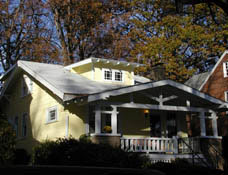
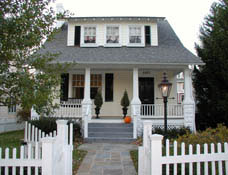
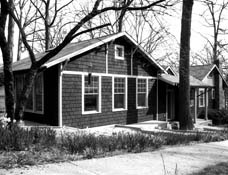
Although the term bungalow now commonly describes a small one- or one-and-a-half-story home or casual beach house, the word actually derives from the Indian Hindustani word bangala, meaning belonging to Bengal. Indeed, the British first built bungalows in India in the mid-19th century. The intent was to design an informal, easily constructed, one-story rest house for travelers. Built low to the ground, the original Indian bungalow has large porches sheltered by wide overhanging eaves, a perfect way to deal with the country’s hot, sunny climate.
The American bungalow did not appear until around 1905. First built in Southern California, where most landmark examples are found, this style dominated U.S. home architecture until 1930.
Read about a bungalow-style home Wentworth remodeled in Silver Spring, MD, or keep reading to learn more about the American bungalow style.
Like its British prototype, the American bungalow has a small interior, a low-pitched roof, and ample porch space. Practical, economical, and well-suited for warm climates, the bungalow meets the needs of young families and first-time homeowners. Stylistically, the bungalow’s simplicity is a refreshing departure from ornate Victorian designs.
Several companies sold bungalow kits through mail-order catalogs at the height of the style’s popularity. Sears, Roebuck & Company started selling plans and building supplies in 1895, but the Aladdin Company of Bay City, MI, started offering complete kits in 1906. All the building components — pre-cut lumber, nails, doors, plumbing — were delivered to the construction site, where local craftsmen erected the homes according to the kit instructions. This practice quickly made the bungalow style ubiquitous all across America. Many bungalows built from kits can be found in Washington, DC, including Chevy Chase and the Palisades area. A fine example currently stands at 5400 Galena Place NW.
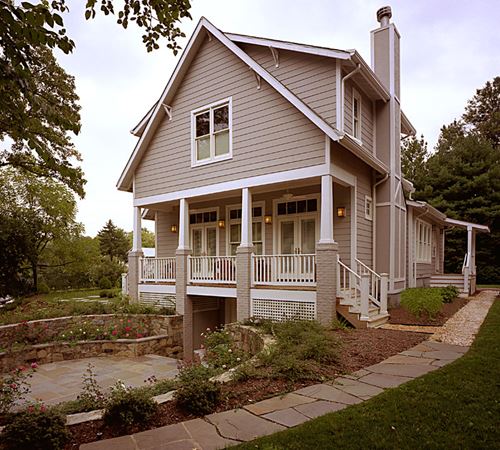
Features of the American Bungalow
Many love quaint American bungalows for their distinctive casual style and emphasis on outdoor living. It’s helpful to learn the characteristics of this style, whether you think your home has American bungalow characteristics or you love a house in the DC area that you suspect is built in this style.
Characteristics
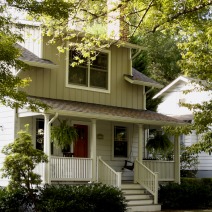
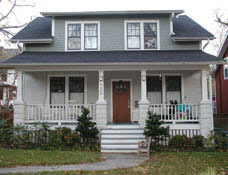
Simple design, sparse decoration, and natural materials are the essential components of the bungalow style. Bungalows always have front porches and a low-sloping gable roof.
Materials
The materials used for a bungalow’s exterior typically suggest warmth and informality. Clapboard is the most common siding, followed by cedar shingle, with the wood usually stained a natural brown color. Stone, brick, or concrete block, molded into a decorative form, can also be found. Geographic location often dictates the exterior material. For example, stucco walls and clay-tile roofs are common in the West because these materials are local to the area.
Roof
The roof of an American bungalow is a low-pitched gable with wide overhangs to shield the house from the sun. Exposed rafters usually extend out from the house, with their ends sometimes cut to profile for decorative purposes. Dormers, if present, tend to be on the front of the house, with a gable or low shed roof.
Perhaps the most distinctive roof element on a bungalow is the triangular knee brace that projects from the front gable. Although meant to suggest the extension of the beams that support the rafter, they are usually decorative.
Windows
Windows are most often double-hung with a large, single pane of glass in each sash. Occasionally, the top sash features a divided-lite pane. Some bungalows also have casement windows. Regardless of operating style, the windows are usually arranged in singles, pairs, or triples to create a prominent gable feature. Window trim is always simple, flat wood.
Entrance
A front porch is a quintessential feature of the bungalow design. Most have a unique supporting-post construction, with short, square upper posts resting on massive piers or solid porch railings constructed of various materials, including stone, brick, concrete block, stucco, clapboard, or shingle. The piers, often used in place of posts, frequently begin at ground level and extend to the porch’s roofline. They often taper as they rise, thus accentuating their structural purpose. Front doors are usually wood paneled with a small, multi-paned window in the upper half.
Wentworth has remodeled many DC-area homes, including bungalows. Visit our photo gallery to see some of our past work! Then, read up on more architecture terms and definitions to further your knowledge.
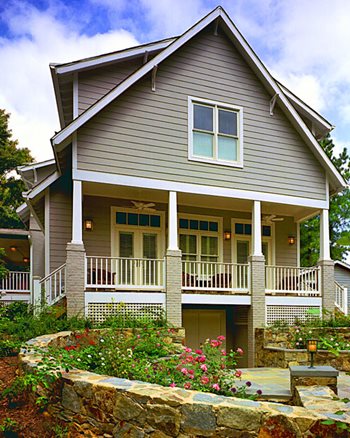
American Bungalow Home Remodeling in VA, MD & DC
The American bungalow remains popular to this day, with many other styles borrowing elements to create a pleasant, inviting look. Whether you live in a historic bungalow built 100 years ago or want to incorporate architectural features of this style into your more modern home, Wentworth can help. Here are the American bungalow home remodeling services we offer:
- American bungalow home remodeling: Perhaps you love your home’s charm but would love a more up-to-date kitchen and bathroom. Our designers and builders can increase functionality and beauty while staying true to the original style.
- American bungalow home additions: The most successful additions are those that blend in seamlessly. Once the work is complete, the add-on increases your living space while looking like it has always been there.
- American bungalow interior reconfigurations: If your home’s layout leaves much to be desired, Wentworth can modify the floor plan to remove wasted space and improve traffic flow, all while working within the parameters of the American bungalow style.
- Custom American bungalow detailing: Do you dream of exposed ceiling beams, butcher block countertops, or a fireplace centerpiece in your living room? Wentworth can add these and many other bungalow-style details.
- American bungalow interior design services: Picking furniture, paint colors, and accessories to match a period home isn’t always easy. Finish off your project with interior design services from Wentworth to tie it all together.
- Facade enhancements in the American bungalow style: Adding dormer windows, knee braces, and a covered porch can make your home look more like an American bungalow. We can also replace damaged columns, siding, and roofing of a genuine historic home.
Get more tips on remodeling a bungalow home. Then, when you’re ready to start your project, contact us for a consultation!
Frequently Asked Questions